How does the most expensive home sale in Sonoma County's history close, get reported by two national publications, and still leave the buyer's name a mystery to the public?
That's what happened on August 21, 2026, when a 1,119-acre property on Sonoma Mountain traded hands for $38.5 million. The sale broke the county's previous record of $30 million, set back in 2010. The Press Democrat reported the price. It could not report who bought the property, or why. The listing agents were bound by detailed non-disclosure agreements, and the owners declined to comment on the buyer's identity or intentions.
That gap between what's technically public record and what actually gets said out loud is the whole story here. If you're pricing land, evaluating an estate, or trying to understand what's happening in Sonoma's market this fall, the record sale isn't a curiosity. It's evidence of how a meaningful slice of this market actually functions, and why the numbers you'll find on a typical home search tell you almost nothing about it.
The Buyer Nobody Can Name
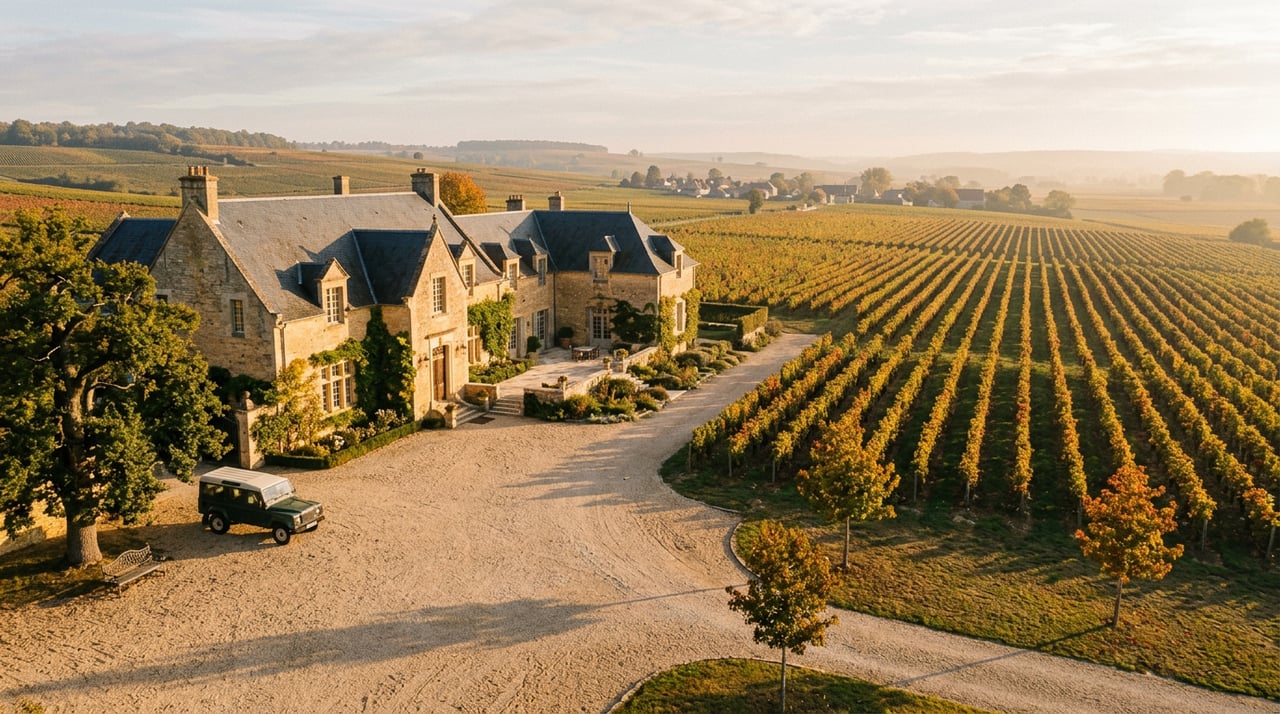
The property, known as the Summit, wasn't a mystery to build. Tech entrepreneur Don McKinney, who founded network security firm International Network Services, bought the raw land in 2014 for about $12 million. It was zoned for grazing at the time. Over the next twelve years he built it into what the listing described as a self-sufficient private estate, with a main house added in 2016 carrying ten bedrooms and ten bathrooms, plus barns, greenhouses, private lakes, and swimming holes. He priced it privately around $50 million last year before formally listing it in May for just under $40 million. It sold in August for $38.5 million, a little under two million below asking.
None of that history explains who wrote the check. According to the Press Democrat, the listing side described privacy as the top priority for buyers in this segment and noted that many Sonoma County homes are second properties, bought very quietly. Quiet closings are routine at the top of Sonoma's market.
Robb Report's coverage of the sale tied recent activity in this segment to wealth moving north from San Francisco and Silicon Valley, including wealth connected to the AI economy. That is a specific driver behind a specific sale.
What the Published Median Actually Measures
Here's where the disconnect becomes useful instead of just interesting. Over the three months ending in the summer of 2026, the median sale price for a home across Sonoma County ran close to $805,000, up a modest six tenths of a percent from the year before. Homes were selling at roughly 100 percent of asking, with about 38 percent closing above list, and the typical listing spent 42 days on market before going under contract, down from 48 days a year earlier. Within the city of Sonoma specifically, spring 2026 figures put the median closer to $1.1 to $1.2 million, reflecting the town's smaller inventory and its mix of historic in-town parcels and larger valley acreage.
Those numbers are accurate. They're also built from a specific population of transactions, the ones that get listed, marketed, and closed through channels that feed public data. The Summit never went through that pipeline in any way that produced a comparable a public database could use. It was shopped privately for a year before it was ever formally listed, and even once it hit the market, the terms of the actual sale were locked behind an NDA. A $38.5 million transaction happened in Sonoma County this year and it will never appear as a comp for anything, because the mechanics of how it sold were designed to keep it out of exactly that kind of record.
This is the part that matters if you're trying to understand where Sonoma's market actually stands. The published median describes the bulk of the market accurately. It says nothing about the top of it, because the top of it doesn't report in.
The Twelve-Year Arithmetic That Complicates the Headline
The record number is worth sitting with for a second reason too. McKinney bought the land for about $12 million in 2014 and spent roughly $33 million over the following twelve years developing it into the estate that eventually sold. That's about $45 million invested against a $38.5 million sale price. Even a record-setting transaction didn't return more than the owner put into it once the years of construction and restoration are counted.
That's not a mark against the property or the market. It's a reminder that the sale price on a large improved estate reflects what a buyer will pay today, not what it cost to build. For anyone who owns acreage and is weighing whether to add a guest house, restore a barn, or put in vineyard infrastructure before selling, the Summit is a real example of how those investments don't always convert dollar for dollar into resale value, no matter how singular the finished property is. Development spending buys a better property. It doesn't guarantee a better return.
Why This Matters If You're Actually Pricing Sonoma Land
If your property, or the one you're considering, is a typical single-family home inside Sonoma's city limits or one of the county's residential neighborhoods, the published median is a reasonably honest guide. It's built from enough transactions of similar properties that the comparison holds.
If you're looking at acreage, a working vineyard, a ranch, or anything that starts to resemble the Summit in scale, the median stops being useful the moment you cross into that category. There simply aren't enough public transactions at that size and price point to build a reliable comp set, and the ones that do close at that level are frequently negotiated and finalized in ways that never generate a public record anyone can search. Press Democrat reporting on the sale describes the same pattern, with many Sonoma County properties bought and sold quietly.
The Press Democrat also reported that the Summit, like some other large North Bay estates and ranches, was not listed with a redevelopment buyer in mind, and that many buyers want the land kept in its natural form. For anyone deciding how to position a large parcel for sale, that points to buyers who are looking for land that stays whole rather than for subdivision potential.
A Few Questions Worth Asking Before You Price Anything
If my home isn't a $30 million ranch, does any of this apply to me? Only indirectly. The county median is still the right benchmark for a standard residential sale. What changes is your expectation for anything with meaningful acreage, agricultural zoning, or winery infrastructure attached, where the public data thins out fast.
How do you actually value a large parcel with no clean public comps? It comes down to breaking the property into its components, the improvements, the land itself, and any permits or entitlements attached to it, and pricing each piece against private transaction knowledge rather than a public database that was never built to capture deals like this.
Is the AI-driven demand reported around the Summit sale pushing up prices for ordinary Sonoma homes too? Not directly, based on what the current data shows. The county's typical home price moved less than one percent over the past year. The activity reported is concentrated in large, private, high-acreage properties, a different buyer pool chasing a different kind of inventory.
If you're sitting on Sonoma acreage, a vineyard site, or a legacy estate and trying to figure out what it's actually worth in a market that mostly doesn't see properties like yours, that's a conversation worth having before you list anything. Mark Stornetta has spent decades on both the finance and the land side of Wine Country real estate, and offers a Confidential Consultation for owners who want a clear-eyed read on where their property actually sits in this market, public data or not.