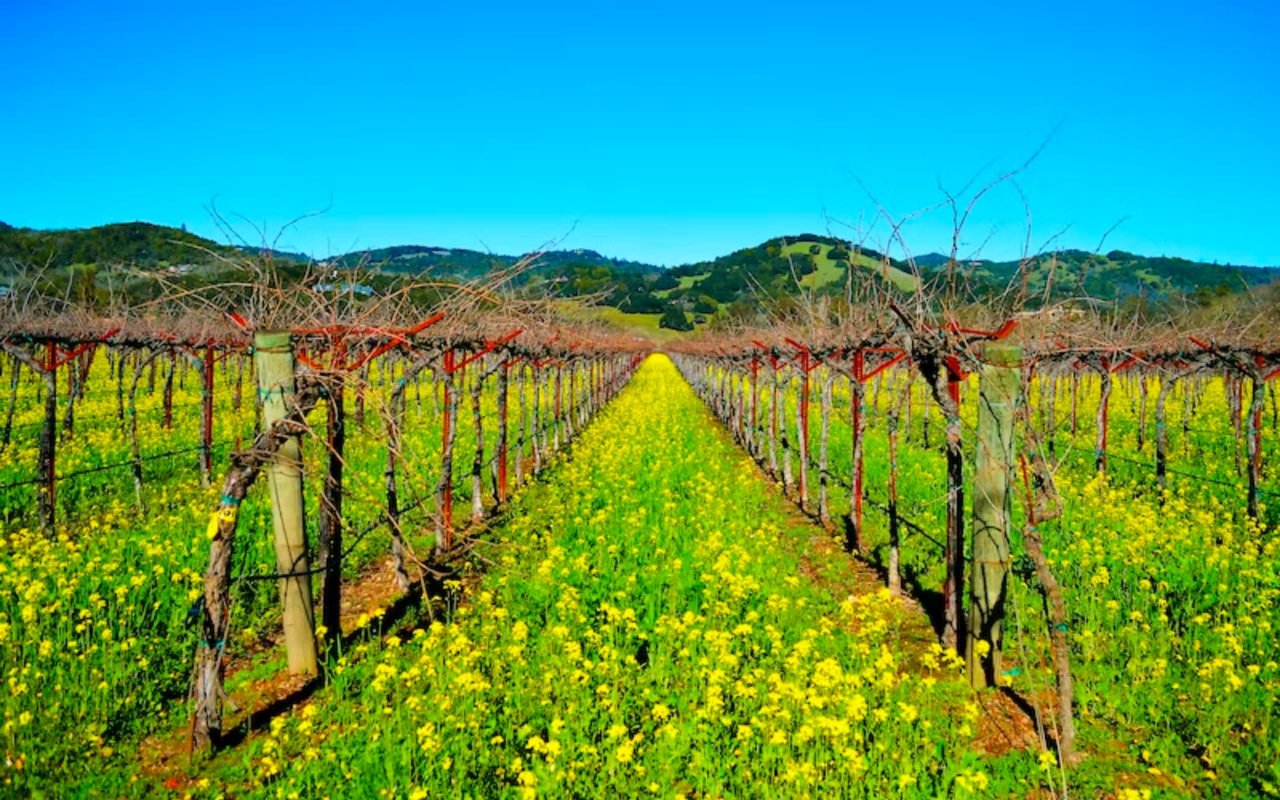
Picture two bare blocks on the same Dry Creek Valley hillside, both on the same slope and both recently cleared of old vines. Under Sonoma County's Vineyard Erosion and Sediment Control Ordinance, the county may treat them very differently. One was pulled under a replant permit. The other was pulled without one. When a buyer later wants to put vines back, one may be a straightforward permit with a single plan review. The other may need engineered erosion control plans, more county site visits and a shorter work season.
The rules have always worked this way, but the problem is growing fast in the valleys around Healdsburg. Sonoma County Agricultural Commissioner Andrew Smith has explained how the current system works. Growers must get a replanting permit before they pull vines or orchard trees. Otherwise, any future replanting counts as a new crop and goes through a more costly and intensive permitting process. From the road you can't tell whether a fallow field still has that status.
Same hillside, two different sets of rules
The county's VESCO application sorts projects into Level I and Level II using slope and soil type. It sets different limits for planting and replanting.
| Site condition |
Level I |
Level II |
| New planting, no highly erodible soils |
Less than 15% slope |
15% to 50% slope |
| Replanting, no highly erodible soils |
Less than 30% slope |
30% or greater slope |
| New planting, any highly erodible soils |
Less than 10% slope |
10% to 50% slope |
| Replanting, any highly erodible soils |
Less than 15% slope |
15% or greater slope |
Take a block with a 20% slope and none of the highly erodible soils. Replanting it is a Level I project. Planting it as new development is Level II. If the soils are highly erodible, a 12% slope works the same way. It is Level I as a replant and Level II as a new planting. The application names the highly erodible soil types as Diablo, Dibble, Goldridge, Laughlin, Los Osos, Steinbeck and Suther. It also says planting on slopes greater than 50% is prohibited.
The gentle valley floors along the Russian River have slopes below every threshold, so the gap rarely matters there. It matters on the benches and lower hillsides, where many Healdsburg-area estate parcels and vineyard blocks sit. That ground falls between 15% and 30%, exactly where the replant and new-planting rules split.
What the higher level costs in money and time
Level II applications must include engineered erosion control plans, in paper and electronic form. The county's own fees are higher too. The Department of Agriculture/Weights & Measures fee schedule for FY 2026–27 is labeled as proposed and dated effective July 1, 2026. Its four Level I tiers without grading or drainage work run from $1,332 to $4,209. The four Level II tiers without grading run from $8,296 to $12,196. With grading or drainage work, the Level I tiers run from $1,956 to $5,062, and the Level II tiers run from $8,142 to $14,704. A Level I project without grading gets one plan review and one site visit. A Level II project without grading gets two of each. Any added engineering or geological review and site visits on Level II or grading projects are charged at cost. None of these figures include the engineer's own fee for preparing the plans.
The calendar adds more friction. Site preparation and winterization for new development must happen between April 1 and October 15. Replanting work can continue until November 15. The application also warns that applications submitted after September 15 may not be issued in the same calendar year, and it requires an intake appointment. Consider a buyer who closes on a pulled Alexander Valley block in early October 2026. Planting next year may depend more on the block's permit category than on how quickly the buyer can hire a vineyard crew.
Why more of this ground is coming to market around Healdsburg
None of this would matter much if few vineyards were coming out. Many are. A California Association of Winegrape Growers study found that Sonoma County lost 2,711 vineyard acres between summer 2024 and fall 2025. That is about 4.6% of the 2024 planted acreage. When Smith presented the 2025 Crop Report to the Board of Supervisors on September 15, 2026, he said the county was down to 58,000 acres of winegrapes. About 6,000 acres were listed under open replant permits. He said whether that acreage gets replanted "remains to be seen." Sonoma County Farm Bureau Executive Director Dayna Ghirardelli told The Press Democrat those open permits allow "another 5,000-plus acres" to be removed.
Grape contracts are shrinking too. In its June 4, 2026 investor-day materials, Treasury Wine Estates said it would not renew grape-purchase contracts expiring through mid-2029. It also planned a substantial reduction in planted North Coast acreage, and expected its leased vineyard area to fall by about 30%. In Dry Creek Valley, Chateau Diana removed a 1.25-acre Zinfandel block and planted 3,000 heirloom sunflowers in its place.
The 2026 harvest makes it hard to say whether this downturn is temporary. Yields were light. Some Russian River Valley Pinot Noir blocks came in at 1 to 1.5 tons per acre, compared with the usual 3 to 5. By mid-September, Sonoma County Winegrowers President Karissa Kruse said "growers' phones started ringing" and that grapes without a home earlier in the year had begun finding buyers. The future of the market is still open. A buyer of fallow land near Healdsburg is really buying the option to replant later. On sloped ground, how much that option is worth depends on the parcel's permit status.
What the pending VESCO amendment would change
The county is moving to loosen part of this rule. On August 18, 2026, the Board of Supervisors unanimously backed revisions to VESCO on first reading. Under the change, growers could pull vines or trees without a permit, switch to another crop, and still qualify for a replanting permit to return to the original crop. To qualify, the land must have been actively farmed for the five years before the swap and keep the same footprint. The draft ordinance extends replant eligibility to land converted from "a perennial crop, row crop, or any other crop that is plowed or tilled, and harvested annually." It would also let a replant permit, which normally runs five years, be extended once for another five years if the request is made in writing before the permit expires.
County staff described what changes. Cultivated lands are currently regulated under the provisions for new vineyard and orchard development. Qualifying conversions would instead fall under the existing replant-permit requirements, including setbacks from lakes, streams and wetlands, and engineered plans for steep slopes and unstable soils.
The ordinance's status is the first thing to confirm. The second reading was on the Board's September 15, 2026 agenda. As of early October, the county's legislative record for that item still shows no final action and no ordinance number. The draft says the ordinance takes effect 30 days after passage. On September 16, Ghirardelli referred to "the new VESCO Ordinance." She also cautioned that "converting a vineyard into another viable agricultural operation isn't necessarily simple or immediate." Until the county confirms adoption and an effective date, treat the new pathway as pending.
Even after adoption, the five-year rule makes a parcel's farming history a due-diligence item. A block that stayed in row crops, olives or another tilled and harvested crop would keep a path back to vines. Smith said growers have raised agave, avocado, high-density olive groves and vegetables as options. Sunflowers like Chateau Diana's would seem to fit the "plowed or tilled, and harvested annually" language. Ground left idle would seem to have a harder time meeting the "actively cultivated" test. The draft ordinance and staff report don't say what records prove five years of cultivation. Ask the county to confirm how it would apply the test to a specific parcel.
Questions to settle before treating a fallow block as vineyard land
- Was the vineyard pulled under a VESCO replant permit, and what are the permit's issue date and expiration date?
- Has the permit already used its one-time extension, or is there still time to request one in writing?
- What is the slope of the block, and does any part of it fall on Diablo, Dibble, Goldridge, Laughlin, Los Osos, Steinbeck or Suther soils?
- Would a replant on this ground be Level I or Level II, and would it be Level II as a new planting?
- If the land has been in another crop, what records show five consecutive years of active cultivation on the same footprint?
- Will the county treat the existing permit as staying with the land after a sale? The county materials reviewed here don't address that, so get the answer from Agriculture/Weights & Measures directly.
A few questions that come up often
Does the replant advantage matter on flat ground near Healdsburg?
Less so. Below a 15% slope with no highly erodible soils, new planting and replanting are both Level I. Below 10%, that holds even on highly erodible soils. The permit category matters most on the slopes between those numbers and 30%.
Can replanting work start right after a fall closing?
It depends on the permit category and the calendar. Replanting work is allowed from April 1 to November 15. New-development work must end by October 15. Applications filed after September 15 may not be issued in the same calendar year.
Is the VESCO amendment in effect now?
It passed first reading unanimously on August 18, 2026, and was scheduled for second reading on September 15. The county's record had not shown final action as of early October, so confirm adoption and the effective date with the county before relying on it.
Pricing a fallow block near Healdsburg means pricing its permit file as well as its soil, slope and water. If you're weighing a pulled or diversified parcel in Dry Creek, Alexander or the Russian River Valley, Mark Stornetta can go through the replant status, slope classification and permit timeline with you before you make an offer. Request a Confidential Consultation.
This article is general information, not legal, tax or financial advice. Consult a qualified professional about your situation.